
You can’t manage what you can’t measure. Leading retailers are discovering that visibility into data quality is the key to unlocking exceptional retail customer experience and fostering trust.
Yet, many operate blindly, unaware of data issues that silently erode customer data quality and impact loyalty until it’s too late.
1. The Visibility Crisis in Retail Data
Let’s look at hidden data issues that hinder customer trust and retail success.
1.1 Hidden Data Issues
Modern retail faces invisible challenges that hinder retail customer experience strategy:
- Undetected Data Decay: 30% of customer experience data becomes obsolete within a year, often without retailers noticing.
- Cross-Channel Blind Spots: Pricing discrepancies between channels can go unnoticed for weeks, silently eroding customer trust and loyalty.
1.2 The Cost of Poor Detection
Without proper systems in place, the consequences are severe:
- Invisible Lost Opportunities: Unknown product data issues lead to missed sales, directly impacting customer data quality metrics.
- Hidden Trust Erosion: 63% of customers quietly switch retailers after encountering inconsistent information.
2. Smart Detection Dimensions for Retail Data
2.1 Visibility Enhanced
Know your data’s true state to enhance the retail customer experience:
- Intelligent Monitoring: Detect improbable product combinations or pricing anomalies.
- Context-Aware Detection: Advanced systems analyze retail-specific data, such as regional pricing variations or localized inventory issues, to identify inconsistencies that directly affect the customer experience data and overall shopping satisfaction.
2.2 Real-Time Awareness
Instantly spot issues that affect your retail customer experience strategy:
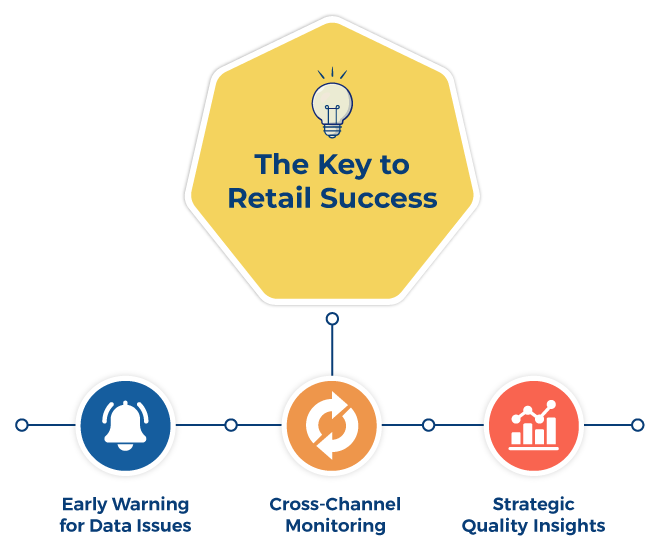
- Early Warning Systems: Address issues before reaching customer touchpoints.
- Cross-Channel Monitoring: Synchronize data across platforms to improve the data-driven customer experience.
2.3 Strategic Quality Insights
Focus on what matters most:
- Critical Point Detection: Monitor key data impacting the customer experience data analyst’s role in decision-making.
- Smart Anomaly Detection: Identify unusual patterns in product data and customer behavior.
3. Implementing Smart Detection Systems
Now, let’s understand smart detection systems to ensure data accuracy.
3.1 Monitoring Framework
Achieve comprehensive visibility to revolutionize customer experience data:
- Automated Quality Scoring: Evaluate customer data quality management in real-time.
- Smart Alert Systems: Use AI-driven alerts to maintain superior customer data quality.
3.2 Continuous Monitoring
Ensure constant improvement in customer data quality metrics:
- 24/7 Quality Tracking: Monitor data across all retail channels.
- Trend Analysis: Use insights from big data to improve customer experience.
4. Measuring Detection Effectiveness
Use measurable indicators to assess impact:
- Issue Detection Rate: Identify problems that affect the retail customer experience strategy quickly.
- Cross-Channel Visibility: Achieve consistency in data and customer experience.
- Early Warning Effectiveness: Prevent issues before they impact your customers.
- Detection Accuracy: Ensure precise issue identification for enhanced big data and customer experience.
Conclusion
In retail’s data-driven future, visibility into customer data experience platform capabilities is essential for loyalty and trust. The path to exceptional relationships begins with robust customer data quality management and effective monitoring.
Qualdo-DRX ensures your data is always reliable and actionable, offering deep insights into how big data improves customer experience. Our platform uses detailed customer data quality metrics and real-time monitoring to eliminate inconsistencies and protect your retail customer experience.